with Michael Hector
Howzat!
Michael Hector
All too often, it’s a promising young Scot who gets on the train heading south, crosses the border and makes his way in the game for an English team, but Michael Hector is one player who has bucked that trend.
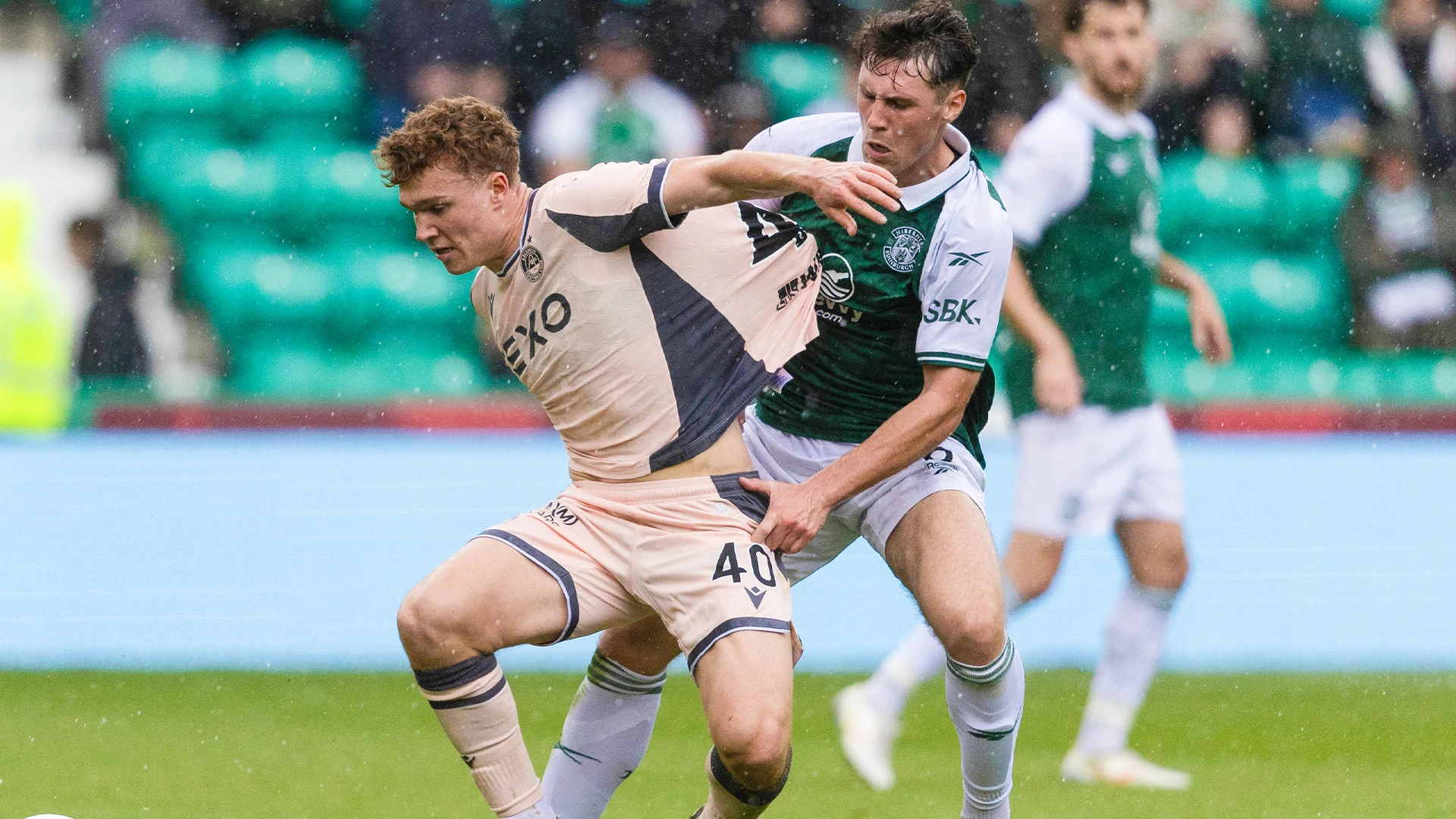
The young Reading defender has come to Pittodrie on loan this season and has quickly made a big impact for Derek McInnes’ team, showing both a sound technique and an ability to read the game that is invaluable at the back.
A natural sportsman, Michael is also a gifted cricketer, his dad having played for England Under 19s and Essex in the past. But it was football that attracted his attention and, qualifying for both England and Jamaica, he could yet follow his dad into the international arena, albeit in a different sport.
“I can play for England or Jamaica. I do not have any Scottish blood in me that I am aware of! There are quite a few of the Reading players who play for Jamaica, as many as four or five at the moment. There has been contact from the county and they apparently have watched me in the past so we will see what happens in the future.
“I grew up in an area of London called East Ham. It is about five minutes away from Upton Park. Despite this I grew up a Chelsea fan. My uncle paid me to support them! He gave me a pound to support the Stamford Bridge club when I was younger! My mum’s side of the family are from the Chelsea area and they used to go to a lot of the games.
“I had a happy home environment. All my family have always been very supportive towards my career. I have one older brother who is a maths teacher. My dad played cricket for the England Youth team and was part of the MCC Young Cricketers programme at Lords which is quite a big thing in the world of cricket. From the age of 16 to 19 he was a full time cricketer but did not carry on playing the game professionally beyond then. Because of his experiences he gives me a lot of support. This support was particularly needed when I got released by Millwall as a youngster. He could easily have said forget about football and concentrate on your studies but he believed in me and told me I would get a second chance somewhere if I kept working hard. Thankfully I have been given that second chance in the game. Everything is going well at the moment and hopefully that will continue.
“Like my dad, I played cricket for Essex. I was quite a good player but being honest the game got a bit boring. The one day stuff was fine but in the four day games you could spend a whole day off the field. I preferred football. It is a shorter game! I am also a keen tennis player. My dad has a tennis club in East London. When I got released by Millwall I played tennis quite a bit and I got quite good. I only started playing when I was 14-15 which is way too late to become a professional. I still enjoy playing from time to time and I help coach the kids when I go back, something that I enjoy doing.
“Although I enjoy other sports I always want to be a professional footballer. Even my teachers said I would do something in football. When I got released at Millwall it was tough. I had not been playing much, I was a midfielder at the time but was not played in my position when I did play and I also got injured. So the experience was quite demoralising. I was very disappointed and it was also embarrassing. I went from being a professional footballer to playing Sunday League. Without the support of my family and encouragement I would probably be doing something different, I would probably be studying at the moment.”
As well as having support behind you to make it as a footballer you need an incredible desire to succeed. The desire needed is even greater if you are rejected at a young age.
“If you do not believe in yourself then who is going to believe in you? I did believe I could do something in professional football. Football is about opinions and Millwall’s opinion was that I was not ready at that stage of my career. It is my job to prove them wrong and that is what I am going to try and do. I am just very grateful that I got another opportunity in the game and I was able to take it at the time.”
Michael mentioned the fact he used to be a midfielder before moving into defence, something that is becoming a trend in the game.
“Nowadays defenders tend to be better on the ball. More central midfielders are becoming centre halves as teams want to play from the back because they want to keep control of the game by keeping the ball. Centre backs still need to be able to win headers and stuff so you need to be strong but I think they can be any size. Barcelona have Javier Mascherano playing in there every week and he is only about 5″ 7. It just depends how a team wants to play.”
Michael relaunched his football career at Reading in 2009 where he joined the Academy. In his first two seasons at the club he spent time on loan at a succession of non-league sides. He then signed a professional contract with Reading in May 2010 and then joined League of Ireland side Dundalk on loan in February 2011. He made his Football League debut for Barnet in November 2011 and his successful spell with the club culminated with Michael winning the Young Player of the Season award. He signed a new contract at Reading in summer 2012 and soon after joined Shrewsbury on a six-month loan. Another temporary spell, this time with Aldershot Town followed, before moving to Cheltenham Town on loan in January 2013. Despite all the upheaval of having to do so much moving, Michael believes going out loan has been the best thing that could have happened to his career.
“It has been great. The clubs I have been to have all been at the right time and have all helped me kick on and take the next step in my career. Every time I have gone on loan and then gone back to Reading and trained with the first team I have felt much more comfortable.
“At Barnet I was close to home and everyone used to come and watch my games. It was my first league experience. In my first game I played against AFC Wimbledon and it was a bit of a derby. They just chucked me straight in! They had lost 6-3 the week before so the manager decided to give me a try. It was weird just sitting in the dressing room and listening to the banter. You do not get that in reserve games. It was such a buzz being part of it. I love playing football and it is such a privilege to be part of the game. Before Barnet I went and played in Ireland. That was a good experience for different reasons. I was only 18 and pretty much on my own living in my own place. I had to look after myself, I had to pay the bills, I had to make sure my rent was on time and clean up after myself! I really enjoyed that time. It made me realise that I did not have to be near home to play football.
“There is nothing better than playing on a Saturday. Playing in a game on a Saturday which really matters. It is a lot better than playing in reserve games. Players do things in reserve games that they would not do if they were playing for the first team. It is great to get that experience. You learn a lot more in the real world. You have to fend for yourself. There is no one there on a Saturday to help you. If you are getting booed and getting stick from the fans you have to deal with it. If you are not playing well the Manager is not going to be nice to you. In reserve games the coaches are generally always kind and try and look at the positives. In the first team you don’t get that second chance, they will be very critical.
“Once you experience first team football you do not want to play for the reserves any more. I want to play for Reading at some stage but I do not want to think about it just yet. I want to concentrate on Aberdeen at the moment and concentrate on one game at a time. Reading get DVD’s of all my games and they send scouts to the away games so they are keeping an eye on how I am getting on. I have come here to impress people and show them what I can do. The coaching staff also send texts to see how I am doing.
“I have played close to 100 first team games now. That is a very positive thing for a young player nowadays and especially for a central defender. It is a position where managers tend to want to have some experience.
“It is also hard for managers in England as they are under so much pressure. You look at Martin Allan this week. He got Gillingham promoted but has got sacked. It is crazy in England the amount of time managers get and the expectation levels that are put on them. It makes it even harder for young players to break into sides down there. Managers are going to play players they trust. If they do not know you they are not going to throw you in at the deep end because their job is on the line. If they get sacked they still have a mortgage to pay for, kids to support. It is not the managers’ fault, it is just the way the game is.”
Much of the reason for this is because of the financial rewards in England. Manchester United earned a record £60.8?million in Premier League TV money after winning the title last season – but even the club who finish bottom next season will exceed that income because of the top flight’s huge new broadcasting deals.
“The money that is in the Premier League, that is where everyone wants to be. If a club can get promoted and survive then they can be set up for years and the clubs can then build on that; ie develop the stadiums, expand the youth teams and bring in players that you would not have been able to afford in the Championship. As players that is where everyone wants to play. You want to be on the back of the papers, you want to be talked up on Match of the Day on a Saturday night. You want to be critiqued by Gary Linker and Co!”
Over the years, fairly or unfairly, our game has always been compared to that of English Football. After years in the doldrums it was hoped Scottish Football was beginning to head in the right direction particularly with the number of young Scots attracting the interest of English Clubs. Unfortunately though many have struggled and we were given a reality check recently when the England U20s beat Scotland 6-0. Although the result was masked somewhat by the performance of the senior side the following night, the result was still of a huge concern to those involved with developing players in this country. As someone who has played in England and Scotland, we asked Michael for his thoughts on the difference between young players north and south of border.
“It is difficult to say. There are a lot of very good young players in Scotland and particularly at this club. I have gone on record as saying the young players in Scotland are very good technically. The young players up here are very comfortable on the ball. I think maybe the English players are a little bit more athletic. I think they are maybe a bit quicker and stronger. In England they start their gym work at very early age, as early as 16 they are doing weights, taking protein shakes and monitoring diets. If both players have the same technical ability, the player who is stronger and fitter is going to come out on top so that side of the game is very important.
“I think it is therefore a very positive step that Aberdeen has taken with the appointment of Sport Scientist Graham Kirk to the coaching staff. Graham is certainly putting us through our paces! I am sure long term he will be of great benefit to the young players at the club.
“I also think he will help improve the current team. It is his job to make sure we can last a whole 90 minutes. A lot of teams lose late goals because they start to slack off. Over a season two or three late goals can make a huge difference. You need to concentrate and be fit for the 90 minutes. We are quite a fit and strong team anyway so the addition of Graham will help us even more.”
“I also think he will help improve the current team. It is his job to make sure we can last a whole 90 minutes. A lot of teams lose late goals because they start to slack off. Over a season two or three late goals can make a huge difference. You need to concentrate and be fit for the 90 minutes. We are quite a fit and strong team anyway so the addition of Graham will help us even more.”